
When Prevention Becomes Politics: Inside Baltimore’s Safe Streets Program

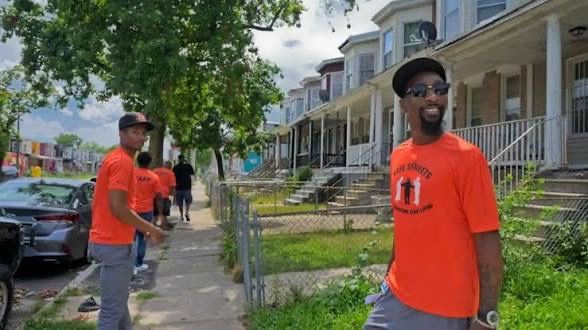
Baltimore — In the shadow of a summer block-party massacre that left two dead and nearly two-dozen wounded, a quiet but determined effort has taken root in one of the city’s most embattled neighborhoods. The program, known as Safe Streets Baltimore, seeks to treat gun violence not merely as a crime problem but as a public-health emergency — one that can be interrupted, redirected and healed.
Launched in 2007, Safe Streets was modeled on the Chicago-based Cure Violence intervention strategy. It is run by the city’s Mayor’s Office of Neighborhood Safety & Engagement (MONSE) under the leadership of Director Stefanie Mavronis, with overall budget oversight falling to the Mayor’s Office and the city’s Board of Estimates via approval of contracts. In his public statement about the program, Mayor Brandon M. Scott said:
“I am proud of the Safe Streets staff members who work tirelessly to mediate conflicts and promote peace in our communities. Together, we are committed to delivering improved public safety outcomes for all Baltimoreans.”

A Focused Footprint, Big Stakes
Safe Streets concentrates its efforts in ten narrowly defined “catchment zones,” totaling about 2.6 square miles. The neighborhoods include : Belair-Edison; Belvedere (Lower Park Heights); Brooklyn; Cherry Hill; Franklin Square; McElderry Park; Park Heights; Penn-North; Sandtown-Winchester; and Woodbourne-McCabe.
Within these zones, evaluations show promise: a rigorous study by the Johns Hopkins Bloomberg School of Public Health found that across the longer-running sites, homicides were roughly 22 percent lower than they would have been without the intervention, and non-fatal shootings were about 23 percent lower overall.
As one outreach worker put it:
“When I first put this shirt on, the whole city knew, and it was hard — but I didn’t take it off.”
From one neighborhood resident’s vantage:
“We’re all from around here … the block we hang on, our friends, they’re all employed now … only after work.” (on the changed vibe)
These shifts may help explain why, even after the mass shooting in Brooklyn in July 2023, that neighborhood later marked more than a full year without a homicide — an achievement city officials attribute in part to Safe Streets’ ground work.
The Upsides – and the Caveats
The successes of Safe Streets are tangible: trained “violence interrupters” embedded in the community, mediation of conflicts before they turn lethal, and data-driven deployment of resources. As the Johns Hopkins report noted: “These findings support the hypothesis that Safe Streets Baltimore has reduced homicides and nonfatal shootings over the many years the programme has operated in some of Baltimore’s most under-resourced neighbourhoods.”
Yet the report also pointed out the unevenness of results: one newer site showed a statistically significant increase in homicides, and across the six most recently launched sites the average reduction in homicides was only 8 percent — not statistically significant.
Residents and intervention workers underscore the fact that timing, staffing, local trust, and resource networks matter. From one site director:
“That’s infallible: daily canvassing plus community safe walks multiplied by community events, equals community buy-in.”
Yet another added:
“In order for Safe Streets to be effective, we need partners. As long as our community is depleted you’ll have spikes in violence.”

Oversight, Transparency & Public Confidence
Among the city’s leadership, support for Safe Streets remains robust — but so do calls for stronger oversight. In August 2025, Mayor Scott sharply defended the program against criticism from the State’s Attorney, saying:
“I don’t respond to nonsense. But what I will say, if you ask the folks in Park Heights, they will tell you that Safe Streets has been effective.”
At the same time, scrutiny has come from the city’s audit and inspector-general offices, and from media reports via FOX45. Auditors found that the city paid over $200,000 to Safe Streets workers without verifying they had done the work. The OIG flagged “fictitious or invalid names” in contract documents, and it has referred aspects of the program’s documentation to law enforcement for potential investigation.
One persistent question: the anonymity of outreach workers. The city argues that protecting their safety means not making their names public; critics say transparency demands disclosure of who is paid, who is intervening, and how outcomes are measured.
Council members have pressed for more detailed reporting and tighter fiscal controls — approving budgets, but increasingly demanding quarterly updates on operations, staffing, and measurable outcomes.
What’s Next: Investigations and Imperatives
The program currently faces a heightened moment of accountability. As of fall 2025, the State’s Attorney has publicly floated possible fraud inquiries into people claiming affiliations with Safe Streets in court proceedings, prompting calls for better documentation of roster, job duties and program engagement.
Meanwhile, community stakeholders emphasize that momentum must not slip: the trust-building, canvassing and conflict mediation cannot be one-off efforts. According to one worker:
“I love this work, because I’m always trying to save an individual life … The time and the money don’t match right now, but guess what? I still do this work.”
For the city’s leadership, the message is clear: Safe Streets remains central to Baltimore’s broader violence-reduction strategy — but only if it can combine measurable impact with sound, accountable governance. As one community leader said:
“The residents want change. They’re tired of the gunfighting.”
The Bigger Picture
Baltimore’s violence-prevention story now reads like a tightrope walk: the homicide rate is at its lowest level in decades, thanks in part to the shift toward a public-health approach to violence. (Programs like Safe Streets are cited as critical components in that shift.) But the gains could unravel if funding retracts, oversight falters or community trust erodes.
In a city that has long borne the burden of structural disinvestment, racial inequities and policing-community tensions, the promise of Safe Streets is both hopeful and challenging. It asks residents, city leaders and the program itself to believe: yes, violence can be prevented — and yes, institutions must be accountable to the neighborhoods they serve.
“Baltimore is built different, so we had to approach public safety differently…” Mayor Scott said recently.
For this experiment in peace to hold, the question remains: Can a model built on trust, relationship-work and data survive scrutiny, sustain investment and deliver consistent results? The answer may define not just the fate of Safe Streets — but the future of Baltimore’s hardest-hit blocks.


Comments